
Dispatch · July 15, 2026 · 6 min · By Alaric Montoya
Folliculitis or an ingrown hair? Telling infection from a trapped hair on textured skin
A crop of itchy, pus-topped spots is a different problem from a single trapped hair, and on textured skin the treatments diverge.
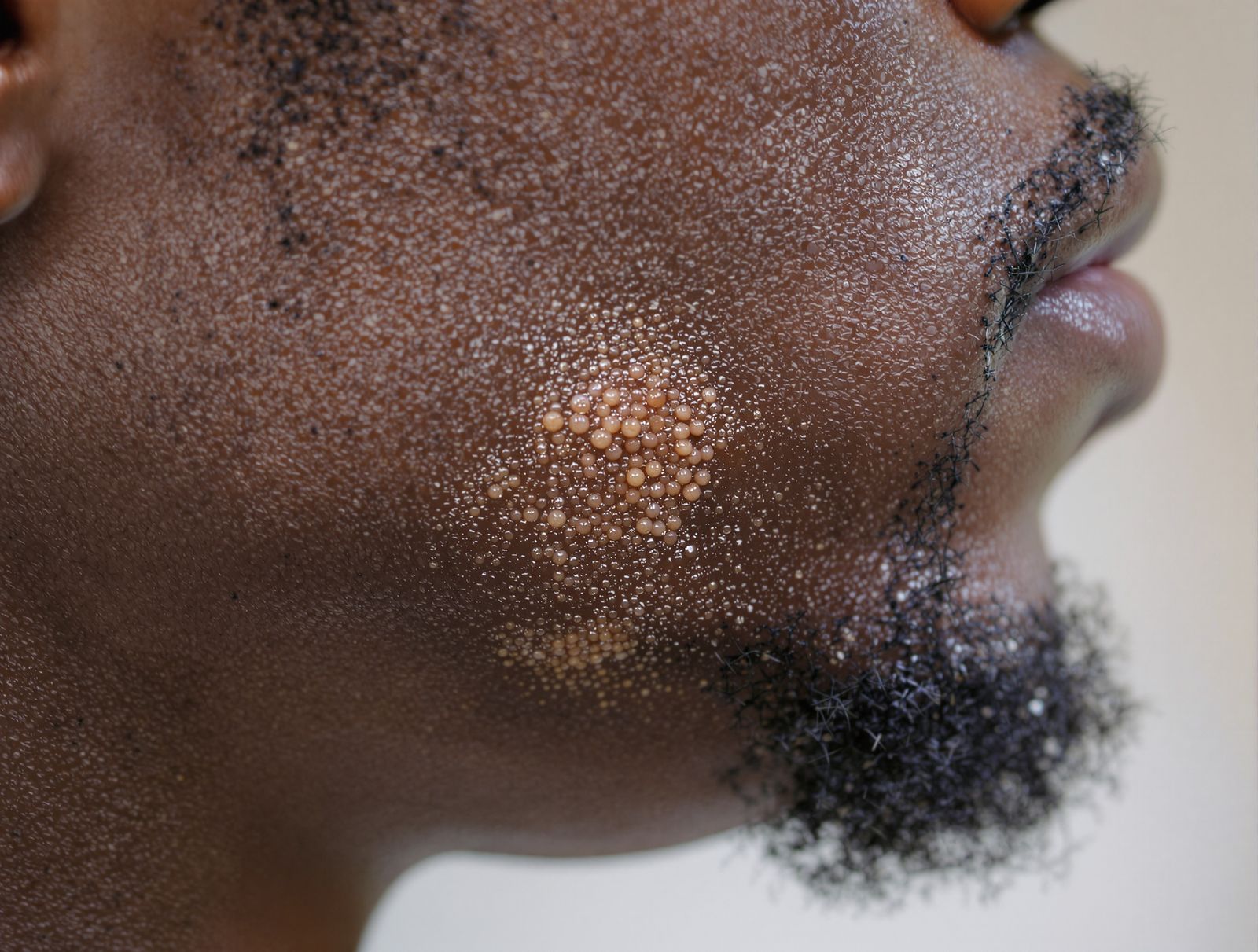
A tender bump where you shave looks the same whether a curved hair has burrowed back into the skin or bacteria have taken hold in the follicle. On curly, coily, and coarse hair the two problems overlap constantly, and the fix for one can feed the other: leaving an ingrown alone lets it settle, while leaving a real infection alone lets it spread. Learning to read the difference between an ordinary ingrown hair and folliculitis is one of the more useful skills for anyone with textured, bump-prone skin.
What an ordinary ingrown hair is. An ingrown starts with geometry, not germs. A sharply cut, tightly curved hair re-enters the skin or never breaks the surface, and the body inflames around it as if it were a splinter. That mechanism, laid out in why curly and coily hair ingrows so much more, produces a single tender bump, often with a dark loop of hair visible just beneath the surface. It appears within a day or two of shaving, stays put, and usually settles on its own within a week or two once the area is left undisturbed (AAD, ingrown hair).
What folliculitis is. Folliculitis is inflammation of the follicle driven by infection, most often the common skin bacterium Staphylococcus aureus, though yeast and irritation can also cause it. Instead of one bump over a trapped hair, it tends to appear as a cluster of small, uniform, pus-topped spots, each centered on a follicle, sometimes itchy or stinging rather than simply sore. Shaving, friction, sweat, and occlusive clothing all push bacteria into follicles, which is why it favors the beard, neck, and thighs (Cleveland Clinic, folliculitis). A specific variety, hot tub folliculitis, erupts a day or two after a poorly maintained pool or spa and is caused by a different bug, Pseudomonas (Mayo Clinic, folliculitis).
The signs that separate them. Four features do most of the work. Number: an ingrown is usually one bump at a time, while folliculitis arrives as a crop of similar spots across an area. Contents: an ingrown may have a visible trapped hair, while folliculitis pustules are topped with a small white or yellow head of pus. Sensation: ingrowns are tender, folliculitis often itches or burns. Course: an ingrown fades over one to two weeks, while folliculitis can spread to nearby follicles if the trigger, a razor or repeated friction, keeps going. None of these is absolute, and the two genuinely coexist when an inflamed ingrown becomes secondarily infected, but the pattern of many pus-topped spots points toward infection (NIH StatPearls, folliculitis).
Why the distinction changes what you do. For an ordinary ingrown, the right response is warmth and patience, never a needle, exactly as covered in how to safely free a trapped ingrown hair: stop shaving the area, apply warm compresses, and let it settle. For folliculitis, the priority is removing the source of bacteria and irritation. Stop shaving over the affected area, switch to a clean towel and pillowcase, wash gently with a mild antibacterial cleanser, and avoid the tight clothing and heavy occlusive products that trap sweat against the skin. Mild cases often clear within a week or so of this. What matters on textured skin is that neither problem should be squeezed or dug at, because on deeper skin tones every episode of trauma can leave the stubborn discoloration described in managing the dark marks razor bumps leave on textured skin.
Where pseudofolliculitis fits in. Confusing the picture further is pseudofolliculitis barbae, the chronic razor-bump condition of the beard and neck. The name means false folliculitis for a reason: it looks like an infection but is driven by the mechanical re-entry of curved hairs rather than bacteria, which is why antibiotics alone rarely fix it. When bumps along the jaw keep returning shave after shave, the fuller treatment plan in pseudofolliculitis barbae in textured hair is the right frame, not another round of antibacterial wash.
When to see a clinician. Get medical care if the spots spread quickly, become painful and swollen, ooze, or come with fever, and if a patch keeps returning in the same place. A dermatologist can confirm whether it is bacterial, fungal, or the mechanical razor-bump cycle, and treat accordingly: a topical or oral antibiotic for stubborn bacterial folliculitis, an antifungal when yeast is the cause, and, for the ingrown side of the ledger, the longer menu in what a dermatologist can actually do for razor bumps that will not quit. Recurrent folliculitis in particular is worth a proper workup, because repeatedly treating an infection that is actually a mechanical problem, or the reverse, wastes months.
The bottom line. One tender bump with a trapped hair, appearing after a close shave and fading within two weeks, is almost always an ordinary ingrown that wants warmth and time. A crop of small, pus-topped, itchy spots that spreads is more likely folliculitis and wants cleanliness, a shaving pause, and sometimes a prescription. On textured skin the shared rule outranks the diagnosis: keep your hands off, protect the skin from friction and sun, and let the bump that would have faded actually fade, rather than turning it into a mark that lingers for months.
Related reading: How to safely free a trapped ingrown hair, and when to leave it alone and Pseudofolliculitis barbae in textured hair.