
Field Notes · July 4, 2026 · 6 min · By Yannick Sorensen
Single blade or five? Choosing a razor for coily, bump-prone hair
The multi-blade closeness that razor ads sell is precisely what coily hair cannot afford.
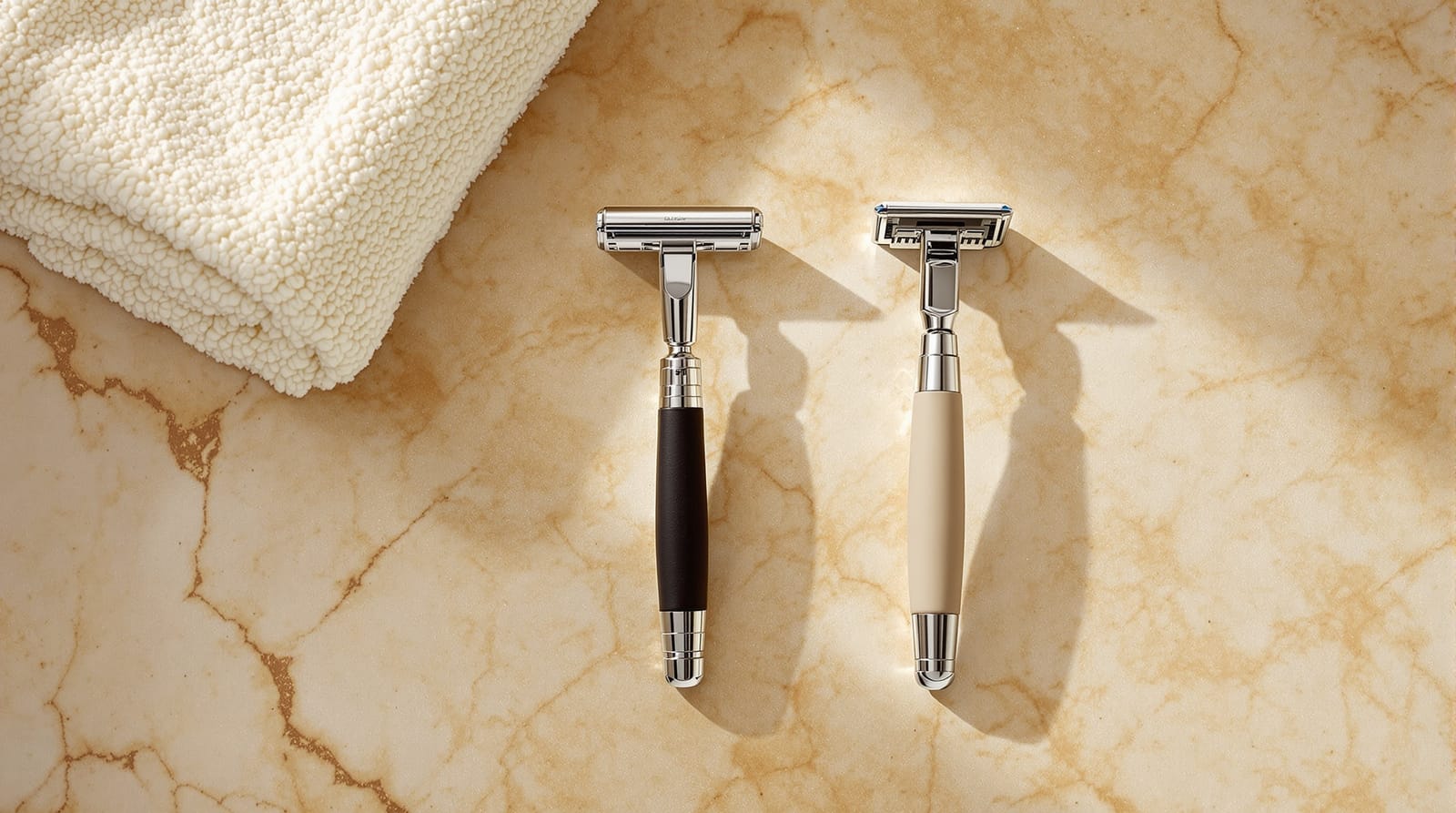
Razor marketing has spent decades equating more blades with a better shave, and for straight hair on resilient skin that closeness is mostly harmless. For coily, bump-prone hair the calculation reverses: the feature you are paying for, a cut below the skin line, is the direct cause of the bumps you are fighting. Choosing between a single blade and a cartridge is not a matter of preference for textured hair, it is a matter of mechanics.
What a multi-blade cartridge actually does. Cartridge razors work by hysteresis: the first blade catches the hair and pulls it slightly out of the follicle, and the trailing blades slice it before it retracts. The result is a cut end that sits beneath the skin surface. On straight hair that stub grows straight out again. On tightly curved hair, a sharp tip released below the surface is aimed back into the follicle wall or the surrounding skin, which is the whole engine of pseudofolliculitis barbae described in medical references on the condition (NIH StatPearls, pseudofolliculitis barbae). The smoothness lasts a day; the bump lasts weeks.
What a single blade does differently. A single-blade razor, whether a classic safety razor or a modern single-blade cartridge, cuts each hair once, at or just above the skin surface, with no tug-and-retract effect. The shave feels less glassy, and that is the point: hair cut at the surface keeps a blunter, shorter-leverage tip that is far less likely to re-enter the skin. Dermatology guidance for razor-bump-prone patients consistently favors single-blade tools or electric clippers that leave visible stubble (DermNet, pseudofolliculitis barbae). Electric clippers with a guard are the gentlest option of all, leaving hair just long enough that the tip never dips below the surface, a strategy that borrows half of its logic from growing the hair out entirely.
The technique still matters more than the tool. A single blade used badly, pressed hard, dragged against the grain, or run over dry skin, will still cut below the surface and still ingrow. Whatever the razor, the fundamentals from how to shave textured hair without razor bumps apply: soften the hair with warm water, use a proper lubricant, shave with the grain in single passes, do not stretch the skin, and stop chasing perfect smoothness. A sharp, clean blade matters too, since a dull edge tears hair and inflames the follicle, so replace blades often, which single-blade formats make cheap to do.
A fair test for your own face. Skin varies, and some coily-haired shavers tolerate a cartridge with light pressure and with-the-grain passes. The honest experiment is four weeks: shave one way with your current tool and technique, then four weeks with a single blade or guarded clippers and the full routine from building a shaving routine for ingrown-prone textured hair, and count bumps. Most people with tightly coiled hair see the difference well before the month is out. General medical guidance on ingrown hairs points the same direction: less closeness, less trauma, fewer bumps (Mayo Clinic, ingrown hair).
The bottom line. For coily hair, the five-blade promise is a trap: engineered closeness produces below-surface tips that curve straight back into the skin. A single blade, or clippers with a guard, trades a few hours of glassy smoothness for weeks of calm skin. On textured hair, that is not a compromise. It is the correct answer to the geometry.
Related reading: Building a shaving routine for ingrown-prone textured hair.