
Field Notes · July 5, 2026 · 6 min · By Yannick Sorensen
Chemical depilatories: the shaving alternative textured hair rarely hears about
Dissolving the hair leaves no sharp tip to ingrow, but the chemistry demands respect.
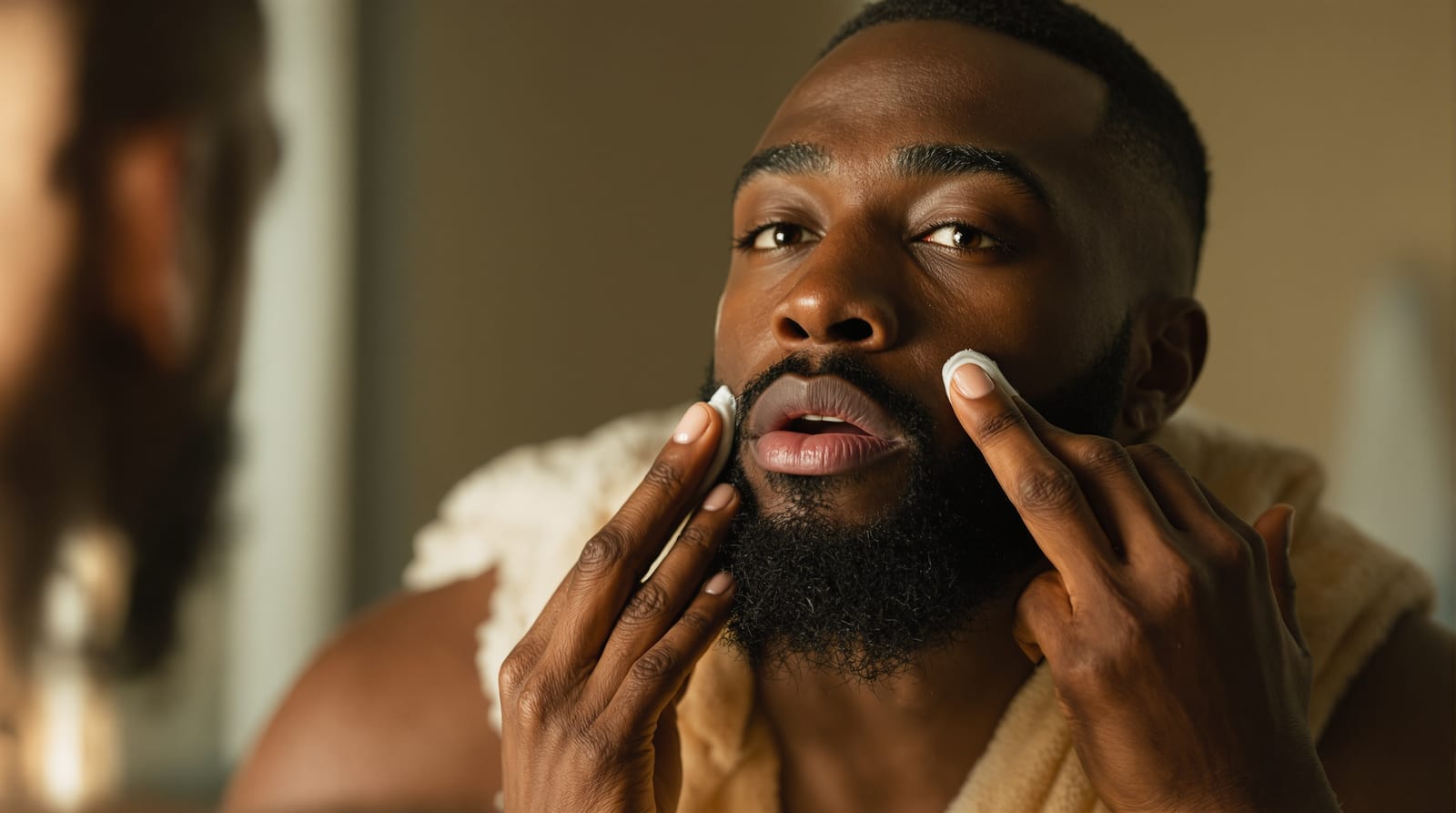
Ask what to do about relentless razor bumps and you will hear about better blades, acids, lasers, and beards. One legitimate option almost never comes up: chemical depilatories, the drugstore creams that remove hair without a blade at all. For coily, bump-prone hair they solve the exact problem a razor creates, and dermatologists have quietly recommended them for pseudofolliculitis barbae for decades (NIH StatPearls, pseudofolliculitis barbae). They deserve a clear-eyed look, benefits and drawbacks both.
Why dissolving beats cutting for curved hair. Depilatories work with thioglycolate salts that break the disulfide bonds holding hair keratin together; the hair softens into a jelly-like strand that wipes away at the skin surface. Two things follow. First, there is no cutting, so there is no sharp, angled tip, and the sharp tip is the entire mechanism behind ingrowns in coily hair, as laid out in why curly and coily hair ingrows so much more. Second, the dissolved end that remains is soft and rounded, so even as the hair regrows it is far less able to pierce the follicle wall or re-enter the skin. For many people with severe razor bumps, a depilatory used correctly produces the calmest skin they have had since they started shaving.
The trade-offs are real chemistry. The same chemistry that dissolves keratin in hair irritates keratin in skin. Leave a depilatory on too long, use it on broken or freshly inflamed skin, or use a strong formula on the face, and you can get stinging, redness, and irritation, which on deeper skin tones can settle into exactly the kind of discoloration described in managing the dark marks razor bumps leave on textured skin. The smell is distinctly sulfurous, and results last longer than a shave but only by a few days. General guidance on hair removal options lists depilatories as safe when directions are followed precisely (MedlinePlus, hair problems), and the direction that matters most is the clock.
How to use one without burning yourself. Patch test first, every new product, on a small area of the jaw or inner forearm, and wait 48 hours. Use a formula labeled for the face and for sensitive or coarse hair if that is where you are using it. Apply to clean, dry, intact skin, never right after exfoliating, and set a timer for the minimum time on the label rather than the maximum. Wipe, do not rub, then rinse thoroughly and follow with a bland, fragrance-free moisturizer. Space sessions at least several days apart, and do not layer the exfoliating acids in your routine onto skin the same day it has been treated with a depilatory; alternate days instead. If a spot burns or goes raw, treat it as a wound: moisturizer, sun protection, and hands off.
Where depilatories fit in the bigger picture. They are a maintenance strategy, not a cure. The bumps stay away only while you keep using the cream, and skin that cannot tolerate the chemistry is better served by the gentler shaving mechanics in building a shaving routine for ingrown-prone textured hair or by the permanent hair-reduction routes. But for the person whose skin cannot tolerate any blade, who is not ready for the cost of laser, and who does not want a beard, a carefully used depilatory is a genuine middle path: no cut, no sharp tip, no new bumps, at the price of respecting a timer and a patch test.
Related reading: To shave or grow it out: a real choice for textured hair.