
Dispatch · July 3, 2026 · 6 min · By Alaric Montoya
Acne keloidalis nuchae or ordinary ingrowns? Reading the bumps on the back of the neck
Firm bumps along the nape that scar are a different condition, and treating them like razor bumps makes them worse.
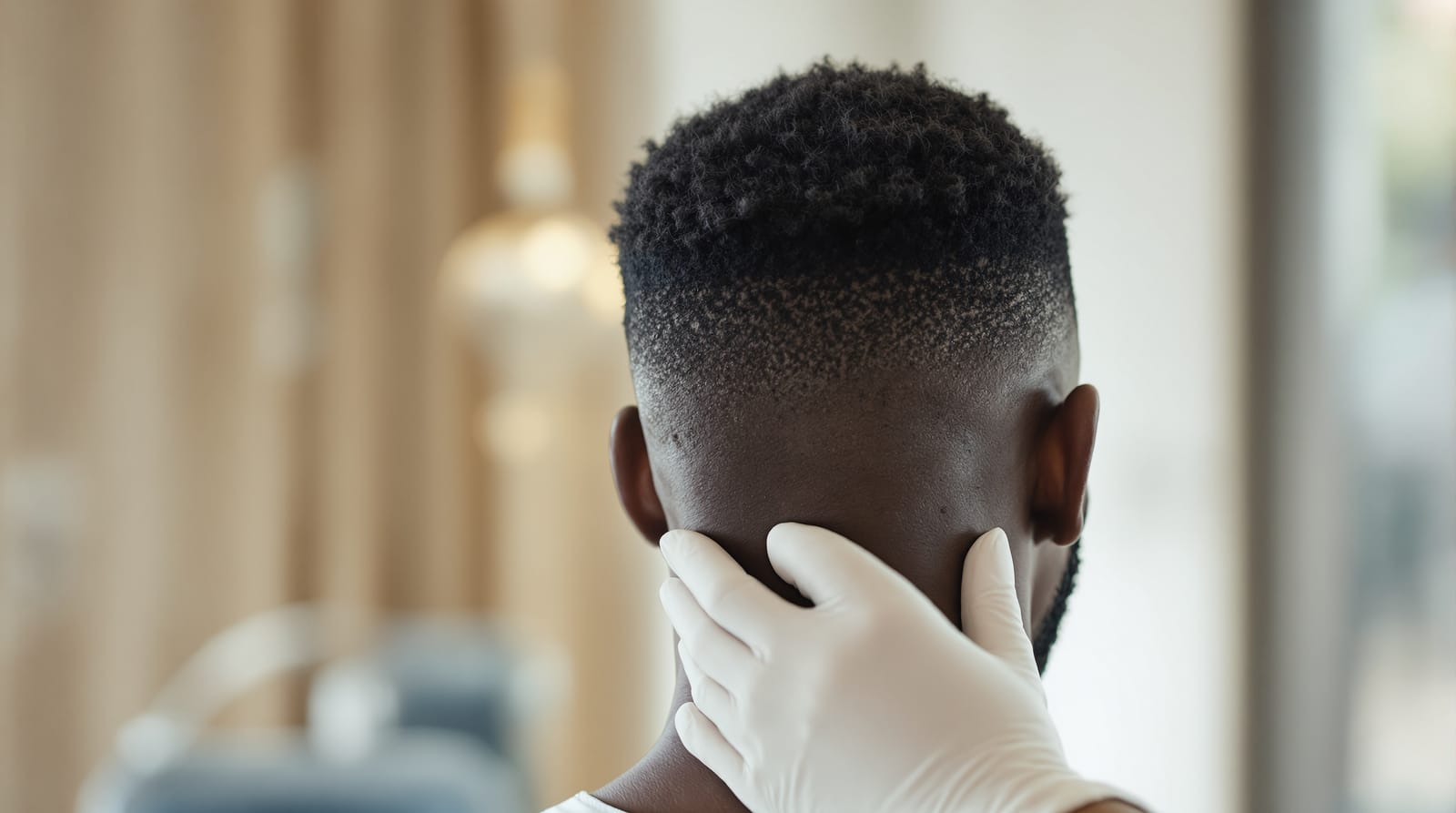
Bumps along the back of the neck after a lineup or a low fade are usually dismissed as ordinary razor bumps, and sometimes that is exactly what they are. But in people with tightly coiled hair there is a second condition that starts in the same place and behaves very differently: acne keloidalis nuchae, a chronic inflammation of the follicles at the nape that heals with firm, raised scar tissue. Knowing which one you are looking at matters, because the home care that settles an ingrown can quietly feed the other.
What ordinary ingrowns at the nape look like. A standard ingrown or razor bump is tender, appears within days of a cut or shave, and settles over a week or two once the area is left alone. The bump is soft or slightly firm, often with a visible hair beneath it, and when it heals it may leave a flat dark mark of the kind covered in managing the dark marks razor bumps leave on textured skin, but not a raised one. The cause is the familiar one: a sharply cut, tightly curved hair re-entering the skin, the same mechanics explained in why curly and coily hair ingrows so much more.
What acne keloidalis nuchae looks like. Acne keloidalis nuchae, sometimes called folliculitis keloidalis, starts as small, itchy, dome-shaped bumps clustered at the nape and lower scalp. Instead of settling, the bumps persist for months, harden, and gradually merge into raised, smooth, keloid-like plaques where hair no longer grows. It overwhelmingly affects men of African descent with coily hair, and close haircuts, friction from collars, and repeated irritation are recognized triggers (DermNet, folliculitis keloidalis). Despite the name, it is not acne and it is not a true keloid; it is its own scarring follicular disorder (NIH StatPearls, acne keloidalis nuchae).
The three signs that separate them. First, duration: an ingrown resolves in one to two weeks, while acne keloidalis bumps persist and multiply over months. Second, texture: ingrowns stay soft or mildly firm and flatten as they heal, while acne keloidalis bumps become hard and fixed, and merging bumps form a raised band across the nape. Third, hair loss: skin that has healed from a simple ingrown grows hair again, while acne keloidalis plaques are smooth and permanently bald. Any one of these, and especially the combination, points away from ordinary ingrowns.
Why the distinction changes what you do. For ordinary nape ingrowns, the standard playbook applies: ask your barber for clipper guards rather than a razor lineup, keep the edge slightly longer, and use the gentle exfoliation described in exfoliating acids for razor bumps on textured skin. For suspected acne keloidalis nuchae, the priority is stopping the cycle early, because established scar tissue does not remodel on its own. That means no razor lineups at the nape, minimizing friction from stiff collars and helmet straps, and seeing a dermatologist promptly rather than waiting it out. Early disease often responds to prescription topical steroids and antibiotics, steroid injections calm thicker papules, and laser hair reduction of the type discussed in laser for ingrowns in textured hair and dark skin can remove the hairs driving the inflammation. Large established plaques sometimes require surgical removal, which is exactly why early treatment is the better path.
The honest bottom line. Most bumps at the nape after a sharp haircut are ordinary ingrowns and will settle with gentler grooming. But firm bumps that persist past a month, harden, cluster, or leave smooth bald patches deserve a proper diagnosis, not another astringent. Caught early, acne keloidalis nuchae is very manageable. Ignored, it writes itself into the skin permanently, and no home routine can undo that.
Related reading: Pseudofolliculitis barbae in textured hair.