
Dispatch · July 26, 2026 · 6 min · By Alaric Montoya
Shaving Waivers and Grooming Policies: What the Documentation Actually Has to Contain
A shaving accommodation is usually refused or time limited not because the condition was doubted but because the request contained a diagnosis and nothing else. What is missing is a record only the person shaving can produce.
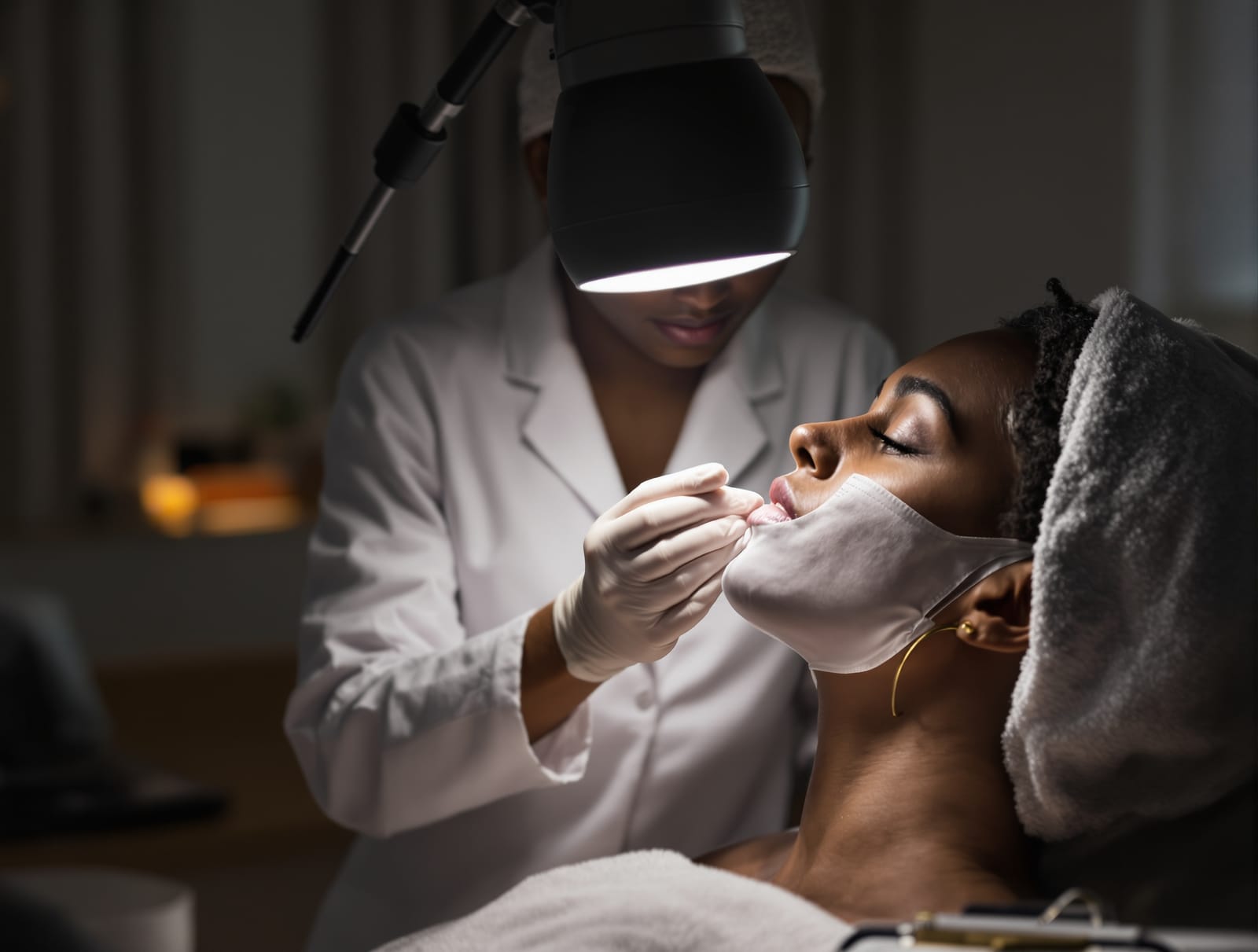
Pseudofolliculitis barbae is one of the few dermatologic conditions whose management is decided as much by an employer or an institution as by a clinician. If shaving is a condition of your job, the treatment plan and the grooming policy are the same conversation, and the document that resolves it is not a prescription. It is a request for accommodation, and it either contains what the reviewer needs or it does not.
Most of them do not. The typical submission is a note stating a diagnosis and recommending a shaving exemption. Reviewers see hundreds of those, they are indistinguishable from one another, and the outcome is frequently a short duration waiver that expires and has to be fought for again, or a denial.
The original element in this piece is a six part documentation kit, plus the patient assembled evidence pack that feeds it, built by working backward from what published policy analyses identify as the points on which these requests turn. Nobody hands this to you. Assembling it is the single highest leverage thing you can do, and almost all of it has to be done by you before the appointment rather than by the clinician during it.
Why this is worth the effort. These accommodations carry consequences beyond comfort. A study in Military Medicine examined shaving waivers in the United States Air Force and their association with promotion outcomes among Black service members, which is a fairly stark demonstration that a grooming exception is not a neutral administrative event (Military Medicine, 2023). The policy landscape has also been moving. A 2026 review in Cutis addresses recent military grooming policy changes affecting service members with pseudofolliculitis barbae, and the direction of travel is toward tighter, time limited accommodations with a stronger expectation of documented treatment (Cutis, 2026). Whatever your institution, the practical implication is the same. Documentation that would have sufficed a few years ago probably will not now.
The evidence pack, assembled by you, before the appointment. Four items.
First, a photographic timeline. Photograph the affected areas, in the same daylight and from the same three angles, at three points: within a day of shaving, at seventy two hours, and at seven days. Do this over at least two shave cycles. What this demonstrates is the relationship between the shaving and the lesions, which is the causal link a reviewer is actually assessing. A single photograph of a bad day demonstrates nothing.
Second, a shave attempt log. Dates, method used, and outcome, written the same day rather than recalled later. This is the item that most distinguishes a serious submission. It shows that alternatives were genuinely attempted rather than dismissed.
Third, a treatment history with durations. Every product and procedure tried, how long it was used consistently, and what happened. Adequate duration matters, because reviewers and clinicians alike discount treatments abandoned after two weeks, and most people underestimate how long they actually persisted. This is where reading in office treatments for stubborn razor bumps beforehand pays off, because it tells you which of those you have actually had a fair trial of.
Fourth, a functional impact note in your own words. Not distress, specifically. Function. Whether lesions have become infected, whether you have needed antibiotics, whether scarring or keloid formation has developed, whether it affects sleep or work performance. Scarring in particular changes the calculus, because it converts a recurring irritation into permanent damage, which is a materially different request.
The six parts of the clinical document. Bring the evidence pack and ask that the letter contain these, in this order.
One, the diagnosis, with the mechanism stated in a sentence. Curved follicles produce a curved hair that re enters the skin, and closer shaving produces a sharper tip and a shorter stump, which is why closer shaving worsens rather than improves the condition. This is the point most reviewers do not know, and it is what makes the rest coherent. The underlying biology is covered in pseudofolliculitis in textured hair.
Two, the objective findings on examination. Lesion type, distribution, and specifically whether post inflammatory hyperpigmentation, scarring, or keloidal change is present.
Three, the treatments tried, with durations, drawn from your evidence pack rather than from memory in the room.
Four, the specific accommodation requested, stated in terms of hair length rather than in terms of not shaving. A request framed as an exemption from shaving reads as a request to opt out. A request specifying a maintained length, with a stated grooming standard, reads as a clinical prescription and is far more likely to survive review.
Five, the duration and the review plan. Requesting an indefinite accommodation invites a shorter one. Requesting a defined period with a stated plan for what will be attempted during it is both more credible and more accurate, because there are things worth attempting.
Six, the treatment plan running in parallel. This is the part people leave out because it feels like conceding, and it is the part that most strengthens the request. Definitive hair reduction is the only intervention that addresses the mechanism rather than managing its consequences, and it has been studied in exactly this population. A 2026 study in Military Medicine evaluated short and long term outcomes of laser hair removal for management of pseudofolliculitis barbae in a military population (Military Medicine, 2026). The technique considerations for textured hair and richly pigmented skin are not trivial and are covered in laser for ingrowns in textured hair and dark skin.
What the studies do not tell you. There is no published evaluation of what makes an accommodation request succeed. Not a weak one, an absent one. The elements above are reverse engineered from what policy analyses identify as the decision points and from the clinical evidence about what actually works, not from any study of reviewer behaviour, and that limitation should be stated plainly. There is also very little long term outcome data on laser hair removal in this specific population despite it being the intervention most often recommended, and almost nothing comparing it against structured shaving modification in a controlled way. Which means the honest position is that the mechanism is well understood, the definitive treatment is reasonably well supported, and the administrative process around all of it is entirely unstudied.
If you can only do one thing from this article, do the photographic timeline. Three angles, three timepoints, two cycles, same light. It takes ten minutes a week for a month, it is the item nobody submits, and it converts a claim into a record.
And if the accommodation is granted, keep the log running. Renewal reviews are where these requests are most often lost, and the person best placed to make renewal straightforward is the one who never stopped documenting. The shaving frequency question underneath all of this, meaning how often is compatible with staying clear, is worth revisiting alongside it in how often to shave to prevent razor bumps.