
Field Notes · July 21, 2026 · 7 min · By Yannick Sorensen
Barbershop lineups and razor bumps: how to get a sharp edge-up without the ingrowns
A crisp lineup is cut at or below the skin line, which is exactly the depth that triggers ingrowns on coily hair. Here is how to keep the edge sharp and the follicles calm.
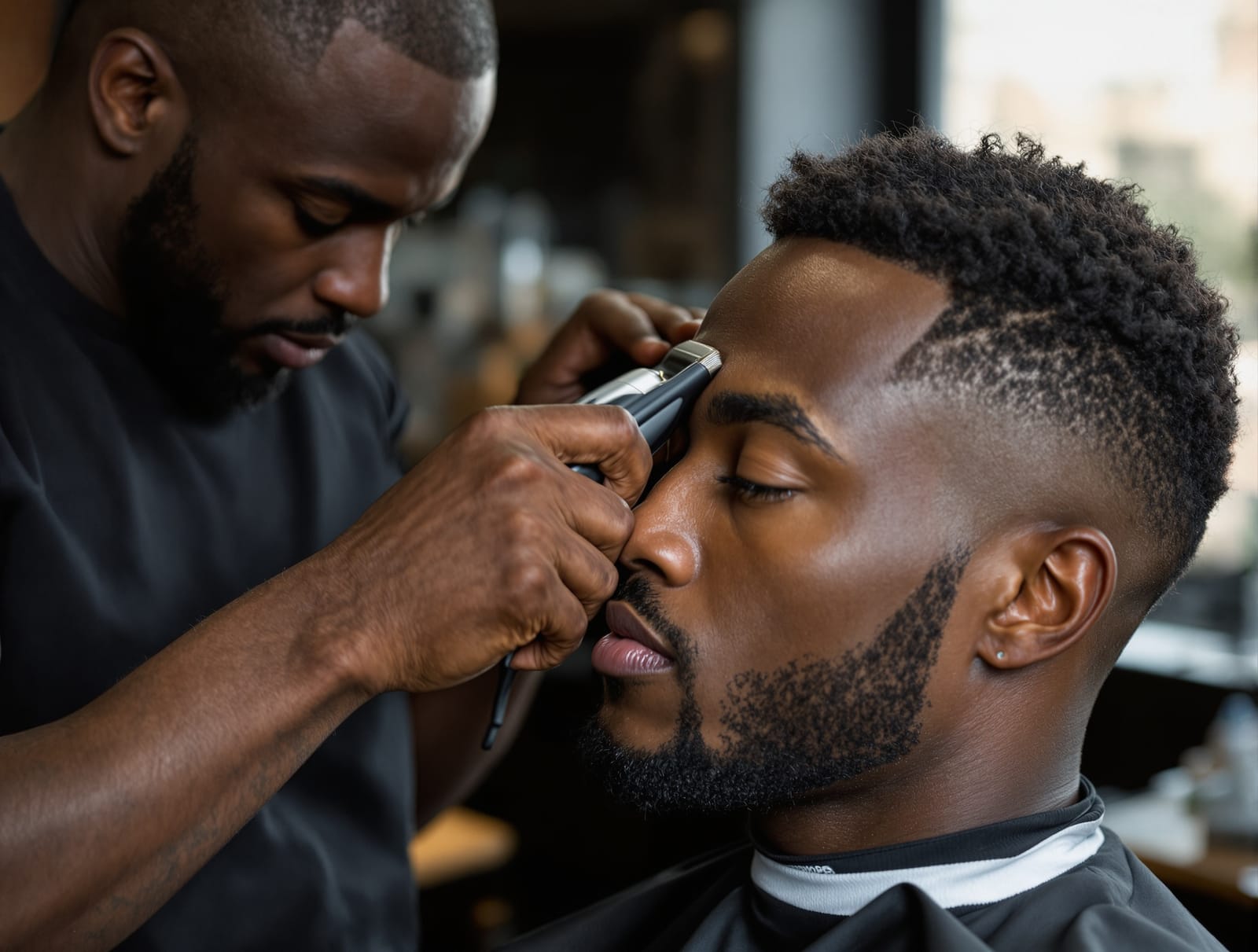
A good lineup is one of the most satisfying things a barber does. The hairline goes from soft and uneven to a clean, deliberate edge in about ninety seconds. It is also, for a lot of people with coily hair, the single most reliable way to produce a row of angry bumps along the temples, the nape, and the beard line by the third day. The problem is not a bad barber. The problem is that the technique that makes an edge look sharp and the technique that causes ingrown hairs are, mechanically, the same technique.
Why a lineup provokes ingrowns when a regular haircut does not
Razor bumps, known clinically as pseudofolliculitis barbae, form in two ways. In extrafollicular penetration, a hair is cut to a sharp point, exits the follicle, curves in the arc that tightly coiled hair naturally follows, and stabs back into the skin a few millimeters away. In transfollicular penetration, the hair is cut so short that the tip retracts below the surface and never exits at all, piercing the follicle wall from the inside. Both mechanisms were laid out in the dermatology literature more than two decades ago, including in a widely cited review, Defining pseudofolliculitis barbae in 2001, published in the Journal of the American Academy of Dermatology.
A normal haircut with a guard leaves hair standing several millimeters proud of the skin. That hair is too long and too flexible to have any chance of stabbing back in. A lineup does the opposite by design. The barber takes the clipper corner, or more often a straight razor or a foil shaver, and cuts the perimeter hairs flush with the skin or slightly under it. That is what creates the optical illusion of a drawn line. It also puts every hair along that edge into exactly the length range where transfollicular penetration happens. If you have ever wondered why the bumps cluster along the edge and not in the middle of a fade, that is your answer. For the full picture of how the condition works on textured hair, see our explainer on pseudofolliculitis barbae in textured hair.
The straight razor is the variable that matters most
Most lineup irritation traces back to the last thirty seconds in the chair. Clippers with the lever closed cut close but still leave a stub above the skin. A straight razor or a foil shaver pulled across a stretched hairline cuts below it. Add the skin stretching that barbers do to get a crisper line and you deepen the cut further, because when the skin snaps back it swallows the hair tip.
This is the same reason single-blade razors are usually kinder than multi-blade cartridges for the face, a tradeoff we covered in detail in our piece on single blade versus cartridge razors for coily hair. The principle carries directly into the barber chair. Less depth, fewer ingrowns, at the cost of a slightly softer looking edge.
What to ask for, in words a barber will recognize
Barbers are not mind readers and most will happily adjust if you tell them what you need. A few requests that work:
Ask for the lineup with clippers only, no razor. This is the highest-yield single change. You give up perhaps ten percent of the crispness and you avoid most of the depth that causes the trouble.
Ask them not to stretch the skin at the temples or nape. Skin tension is invisible in the mirror and enormously consequential three days later.
Ask for a wider natural hairline rather than a lifted one. Every millimeter a barber pushes the line back is a row of follicles cut flush against skin that had been comfortably covered.
Ask for no alcohol-based aftershave on freshly cut skin. A sting is not disinfection. It is barrier disruption on skin that has just been abraded, and on deeper skin tones that inflammation is what feeds the dark marks that outlast the bump itself.
Stretching your interval is a real lever
A weekly lineup means the hairline never gets more than seven days to recover before it is cut flush again. Follicles that are already inflamed do not get the runway they need. Going to every ten to fourteen days, or alternating a full lineup with a lighter cleanup that leaves the perimeter alone, gives the skin time to settle. This is the same frequency logic we walk through in how often you should shave, applied to the hairline instead of the beard.
Hygiene: worth checking, rarely the main culprit
Barbershop clippers and razors that are not disinfected between clients can transmit bacterial and fungal infections, which is why state licensing boards require disinfection protocols. If you develop pustules with genuine tenderness and spreading redness rather than the firm, itchy papules of ordinary razor bumps, you may be dealing with infection instead. Our guide on telling folliculitis from an ingrown hair covers how to read that difference. That said, for the great majority of people the bumps after a lineup are mechanical, not infectious.
When bumps at the nape are something else
Firm bumps that persist along the back of the neck, especially ones that harden, join together, or leave permanent bald patches, may not be simple ingrowns at all. Acne keloidalis nuchae is a distinct scarring condition that is aggravated by exactly the close nape shaving a lineup involves, and it needs different management. We wrote about how to tell the two apart in acne keloidalis nuchae or ordinary ingrowns. If bumps at your nape are getting firmer rather than flatter over months, that is a dermatologist visit, not a technique adjustment.
What to do in the two days after the chair
Rinse with cool water and a non-comedogenic cleanser the same evening. Skip exfoliating acids for the first twenty-four hours, since freshly abraded skin does not need them, then resume a gentle salicylic or glycolic product on your normal schedule to keep the follicle openings clear. Moisturize the hairline the way you would the rest of your face. If a hair is visibly trapped under the surface, leave it alone rather than digging, and use the warm-compress approach described in our guide to safely freeing a trapped ingrown hair.
On topical treatment generally, the 2019 review Pseudofolliculitis Barbae: A Review of Current Treatment Options in the Journal of Drugs in Dermatology concluded that the most successful approach combines changes in shaving behavior with topical therapy, rather than relying on either alone. That is the operating principle here. No serum rescues a hairline that is being cut below the skin every seven days.
The takeaway
The sharpness of a lineup and the depth that causes ingrowns are the same thing. You cannot have a razor-cut edge and calm follicles at the same time, so decide which one you actually need. For most people the workable compromise is a clipper-only lineup, no skin stretching, a wider natural line, and ten to fourteen days between visits. If you have already accumulated dark marks along the temple or jaw from previous rounds, our guide to managing the dark marks razor bumps leave covers what actually fades them. And the American Academy of Dermatology's guidance on razor bump remedies for men with darker skin tones is worth reading before you assume the answer is a better product.