
Explainer · August 2, 2026 · 5 min · By Zahra Pemberton
Salicylic, Glycolic, or Mandelic: Which Acid Actually Helps Ingrown Hairs in Curly, Coily Hair?
All three exfoliating acids show up on product labels aimed at razor bumps. They do not work the same way, and the differences matter for textured hair and melanin-rich skin.
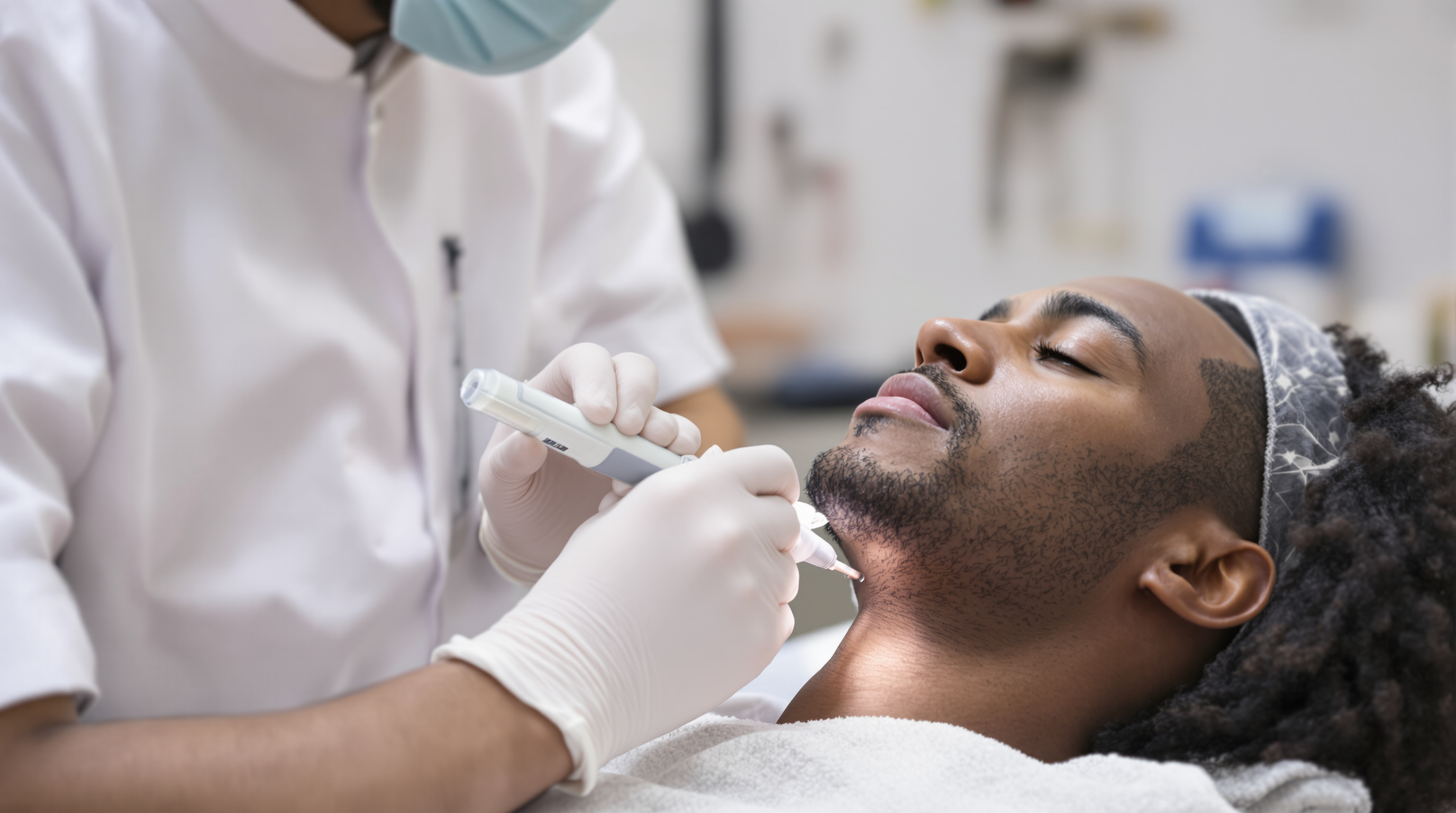
Walk down any shaving or skincare aisle and you will find at least three acids marketed for ingrown hairs: salicylic, glycolic, and mandelic. For people with tightly curled hair, where the shaft curves back and re-enters the skin or pierces the follicle wall from inside, the choice is not trivial. Each acid has a distinct chemistry, a distinct depth of action, and a distinct risk profile on skin that hyperpigments easily. This explainer walks through what each one actually does at the follicle level, and where the evidence is strongest.
First, what the acid needs to accomplish. An ingrown hair in curly or coily skin usually forms one of two ways. In extrafollicular penetration, the hair exits the skin, curls back, and stabs the surface nearby. In transfollicular penetration, the sharpened tip pushes through the follicle wall before it ever reaches the surface. In both cases, a thickened layer of dead skin cells makes things worse: it traps emerging tips, blocks the follicular opening, and gives the curved shaft more material to snag on. The job of a chemical exfoliant is keratolysis, meaning it loosens the bonds between corneocytes so the outer layer sheds evenly and the hair meets less resistance on its way out. No acid dissolves a hair or changes its curl. What it changes is the terrain.
Salicylic acid: the one that goes where the problem is. Salicylic acid is a beta hydroxy acid and, critically, it is lipophilic. It dissolves in oil, which means it can travel down into the sebum-filled follicular canal rather than working only at the surface. That gives it two relevant actions: it desquamates the skin around the trapped hair, and it helps clear keratin debris inside the pore itself. It also has mild anti-inflammatory activity because it is chemically related to aspirin, which is useful since much of the visible bump in pseudofolliculitis barbae is inflammation around a hair fragment the body treats as a foreign object. Typical over-the-counter concentrations run from 0.5 to 2 percent. The main caution is dryness with overuse, which paradoxically thickens and roughens the surface over time.
Glycolic acid: the one with the most direct trial evidence. Glycolic acid is an alpha hydroxy acid and the smallest molecule of the three, so it penetrates the upper skin layers quickly and produces brisk surface exfoliation. It is water soluble, so it does not follow oil into the follicle the way salicylic acid does, but it is very effective at thinning the compacted outer layer that traps re-entering hairs. Glycolic acid also has a documented track record specifically for razor bumps: small controlled studies in the dermatology literature found that daily glycolic acid lotion, in the range of 5 to 8 percent, significantly reduced lesion counts in pseudofolliculitis barbae compared with placebo, with some evidence it may soften the hair shaft itself so it exits at a less aggressive angle. The tradeoff is irritation potential. Glycolic works fast, and on deeper skin tones any irritation carries a real risk of post-inflammatory hyperpigmentation, the dark marks that often outlast the bump itself.
Mandelic acid: the slow, gentle option for reactive or deeply pigmented skin. Mandelic acid is also an alpha hydroxy acid, but its molecule is roughly twice the size of glycolic. Larger molecules penetrate more slowly and more evenly, which translates to less stinging, less redness, and a lower likelihood of the irritation cascade that triggers hyperpigmentation. It is also modestly lipophilic, more so than glycolic, so it has some follicular reach. Dermatologists working with Fitzpatrick IV to VI skin often reach for mandelic acid first for exactly this reason. The honest downside: it is gentler because it is weaker per application, so results build over weeks rather than days, and the direct trial evidence for ingrown hairs specifically is thinner than for glycolic.
How to choose in practice. If your primary problem is clogged, congested follicles with hairs trapped under a visible plug, salicylic acid's oil solubility makes it the logical starting point. If you have classic razor bumps after shaving and your skin tolerates actives well, glycolic acid has the most direct clinical support. If you have deeply pigmented skin, a history of dark marks after every bump, or generally reactive skin, mandelic acid is the safest on-ramp, accepting slower progress. Whichever you choose, apply to clean dry skin, start two to three nights per week, and do not layer multiple acids or combine them with a retinoid on the same night without guidance. Wait at least 24 to 48 hours after shaving before applying any acid to freshly shaved skin.
Two things no acid replaces. First, technique: shaving with the grain, using a single-blade or guarded tool, and never stretching the skin taut does more to prevent ingrowns than any topical. Second, patience with existing lesions. Acids prevent new ingrowns and help trapped tips surface. They do not extract embedded hairs, and picking at bumps while using exfoliants is a reliable recipe for scarring. If bumps are widespread, painful, or leaving keloidal scars along the beard line or nape, that is a pattern worth taking to a dermatologist rather than the skincare aisle.